The forklift is often the starting point for any MHE dealer/customer relationship. But what happens when that forklift runs out of battery power?
Users will look at improvised charging, unstable pallet stands, and makeshift battery corners. A single rotating charger may work in the short term, but these solutions can create risks for both staff and equipment. As electric fleets continue to grow, battery handling is becoming a more significant part of the material-handling environment. And those makeshift solutions don’t necessarily grow with them. That creates an opportunity that can be easy to overlook.
It Starts With The installed base
Every MHE dealer already has something valuable: an existing customer base operating electric equipment. Those customers may already have battery-handling processes in place. They might use a crane, a forklift, manual methods, or equipment that has been in the facility for years. But having an existing process doesn’t necessarily mean it is still the right process. Fleet sizes change. Batteries get larger. Facilities change. Customers add shifts. Equipment gets upgraded. When those changes happen, the battery-handling setup can easily get left behind. That gap can create an interesting opportunity for MHE dealers.
The Battery Is Always Part of The Equation
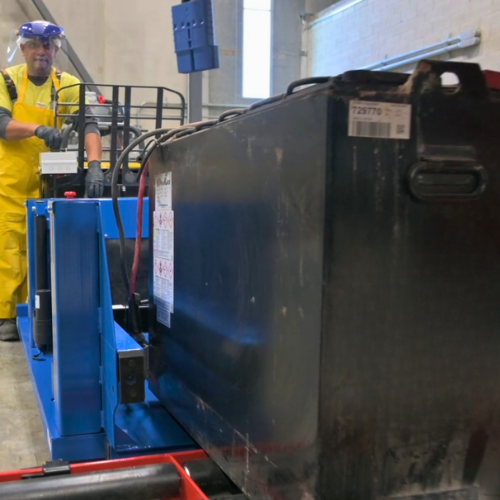
A forklift doesn’t operate independently of its battery. For customers running electric fleets, batteries are a critical part of the operation — and moving those batteries safely and efficiently is a material-handling challenge. Yet battery handling can sometimes sit outside the traditional MHE conversation.
That is changing. As customers continue to invest in electric equipment, battery handling can become a natural extension of the solutions dealers already provide.
An Opportunity Beyond The Forklift
For dealers, this isn’t necessarily about adding another product to the catalogue. It’s about expanding the conversation. A customer buying electric forklifts may also need a safe and efficient way to remove, transport, position and install the batteries those trucks depend on. And a customer that already has battery-handling equipment may eventually need to replace it, upgrade it, or adapt it to a changing fleet. In other words, the opportunity doesn’t end once the forklifts are delivered. Forklift attachments can also be a valuable add-on conversation, particularly when customers are looking for ways to make their existing equipment more versatile.
What Makes Battery Handling Interesting For Dealers?
Battery handling sits in a useful position within the MHE ecosystem. It is closely connected to a dealer’s existing customers and their equipment, but it is specialized enough that it may not always be top of mind when a fleet or warehouse project is being discussed. That creates room for dealers to bring something additional to the table — particularly when they can connect battery-handling solutions to the customer’s broader material-handling operation. The dealer already understands the fleet. They understand the facility. They understand how the customer operates. Battery handling can be another piece of that conversation.
The Conversation Is Getting Bigger
The material-handling industry continues to evolve, and the shift toward more adaptable equipment is one part of that evolution. As that happens, the question isn’t simply how customers move products around their facilities. It’s also how they move the equipment that makes that work possible — and everything that supports it. For MHE dealers, battery handling is one of those opportunities. Because sometimes the next opportunity isn’t a new truck. It’s what keeps the truck running.
Making Battery Handling More Universal
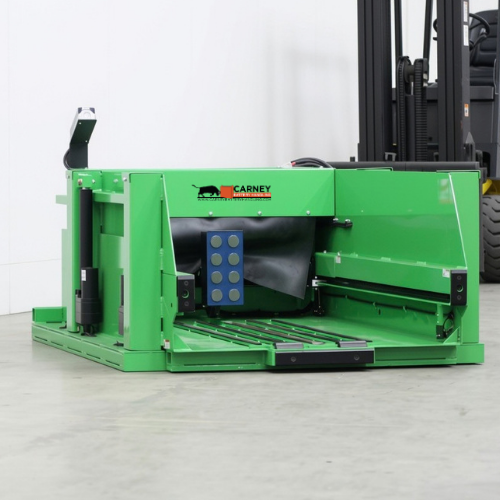
One of the challenges dealers face is that battery-handling equipment is often highly dependent on the specific truck and battery configuration. Different trucks can have different battery roll-out heights, making a one-size-fits-all approach difficult. That’s one of the reasons we developed the Universal Battery Tugger. Instead of requiring a dedicated tugger for every battery configuration, the Universal Battery Tugger is designed to handle batteries regardless of their roll-out height. Dealers can simply order a unit sized for the customer’s largest battery, giving the operation one battery-handling solution that can work across the fleet.
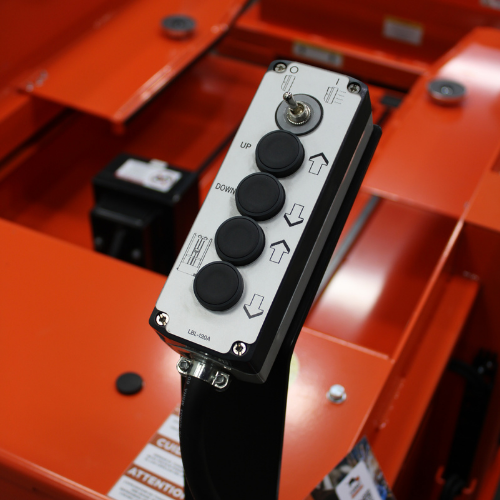
For dealers, that can make the conversation much simpler:
Don’t just ask what trucks the customer needs. Ask how they’re handling the batteries.
And remember that safe and efficient battery changing equipment protects staff and assets like trucks , roller stands & batteries and reduces truck down-time thus increasing productivity.