Battery handling isn’t usually the first thing anyone thinks about when they look at forklift productivity. The truck gets the attention. The battery usually doesn’t. Until it becomes a problem.
A battery that takes too long to change. A roller that wasn’t built for the load. A changer that no longer lines up because the forklift tires are worn.
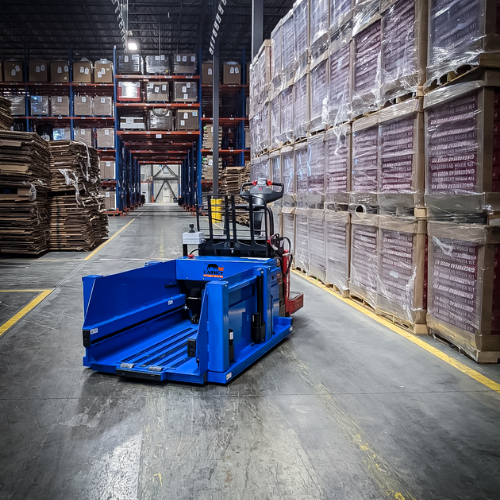
Operators manually pushing batteries that are simply too heavy. A battery room that has run out of space before the fleet has stopped growing. These aren’t unusual problems. And they’re rarely caused by one bad decision. More often, they’re the result of buying or designing battery handling equipment without looking at the whole operation. That’s something dealers, fleet managers, equipment buyers, and third-party consultants should all be looking at.
The right questions aren’t just “What battery changer do we need?”
They’re:
- What batteries are we handling?
- What trucks are we handling them from?
- How heavy are they?
- How often are they being changed?
- How much time does each change take?
- How much space does the battery room really have?
- And what happens when the fleet changes?
Here are 10 battery handling mistakes worth looking for before they become expensive ones.
1. Asking Employees to Move Batteries That Are Too Heavy.
The Mistake: “That’s how we’ve always done it.”
It’s one of the most expensive sentences in a battery room. Batteries are heavy. Asking employees to routinely pull or push them manually without understanding the applicable Health & Safety requirements can create an unnecessary ergonomic and workplace-safety risk.
And if an employee gets hurt, the cost isn’t limited to the incident. Now you’re potentially dealing with lost productivity, replacement labor, workers’ compensation costs, and compliance issues.
For a dealer or third-party equipment provider, this is an important question to raise during a site visit. Don’t just look at the forklift. Watch what happens when the battery comes out.
Who moves it?
How far?
How often?
And how much force does it take?
The question to ask
Do you know the current Health & Safety requirements that apply to manually moving the batteries in your facility? Don’t assume the answer is yes!
The better approach
Start with the battery—not the equipment.
Understand battery weight, dimensions, movement distance, frequency, and the physical demands being placed on operators. Then determine where mechanical assistance makes sense. The objective isn’t necessarily to eliminate every manual movement. It’s to make sure the process is appropriate for the loads being handled and the people handling them.
2. Buying a Fixed-Height Battery Changer for a Fleet That Isn’t Fixed-Height.
The Mistake: The battery changer fits the forklift on the day you install it.
Great. But what happens six months later?
Most fleets don’t consist of one identical forklift model. Different trucks can have different battery compartments and working heights. Tires also wear, changing the height at which the battery needs to be handled. That means a fixed-height solution can become a limitation surprisingly quickly.
And when the operator must fight the equipment to get the battery aligned, your battery changer isn’t saving time. It’s costing it.
The question to ask
Can the equipment accommodate the range of truck heights in this fleet—including changes caused by tire wear?
The better approach
Specify the handling system around the fleet’s range, not one truck’s dimensions. For dealers, this is especially important. If you’re supplying equipment to a customer with multiple truck types, don’t just ask which forklift needs the battery changed. Ask which forklifts will need the battery changed over the life of the equipment. That’s a much better way to protect the customer’s investment.
3. Assuming Standard Conveyor Rollers Are Good Enough.
The Mistake: “If it rolls, it must be able to handle a battery.”
Not necessarily. Battery handling puts very different demands on rollers and stands than many conventional conveyor applications. The weight, load concentration, battery dimensions, and frequency of movement all matter. A roller system that wasn’t designed for the application can become a maintenance problem—or a handling problem—long before anyone expected it to.
The question to ask
Are these rollers actually designed for battery handling? Not, “Can they handle the weight?”
Designed for the application, there is a difference.
The better approach
Look at the actual battery weights, dimensions, load characteristics, and frequency of use. Specify rollers and stands around those conditions. For dealers and third-party buyers, don’t accept “It’s a conveyor roller” as an answer. Ask what the component was designed to do, what loads it is rated for, and whether the complete system is appropriate for the battery-handling application.
4. Choosing Equipment That Isn’t Built for the Battery Room Environment.
The Mistake: Choosing battery handling equipment based on capacity, dimensions, and price—and forgetting where the equipment is going to live.
A battery room is not an ordinary warehouse environment. With lead-acid batteries, corrosive electrolyte can be part of the working environment. Equipment that isn’t appropriately protected can deteriorate, corrode, and require more maintenance than expected. And that creates a familiar cycle: repair it, replace a component, repair it again.
The question to ask
Is the equipment designed for the environment in which it will actually be used?
The better approach
Consider corrosion resistance and acid exposure when specifying the equipment from the beginning. That means looking at materials, finishes, exposed components, and the overall construction—not simply asking whether the equipment can handle the battery’s weight. For dealers, this is an easy detail to overlook when comparing products on a specification sheet. It shouldn’t be. The battery room environment matters just as much as the battery dimensions.
5. Designing The Battery Room for Today’s Fleet Only.
The Mistake: Planning the battery room around the number of batteries you have today.
It sounds reasonable.
Until the fleet grows.
Maybe the customer adds another shift. Maybe production increases. Maybe another warehouse is added. Maybe the fleet changes and more batteries are required. Suddenly, the battery room that was “big enough” isn’t. And expanding a battery room after the fact isn’t always simple. It can mean construction costs, operational disruption, and floor space that must come from somewhere else.
The question to ask
Where will your next 10, 20, or 50 batteries go?
If nobody knows, it’s probably time to look at the storage plan.
The better approach
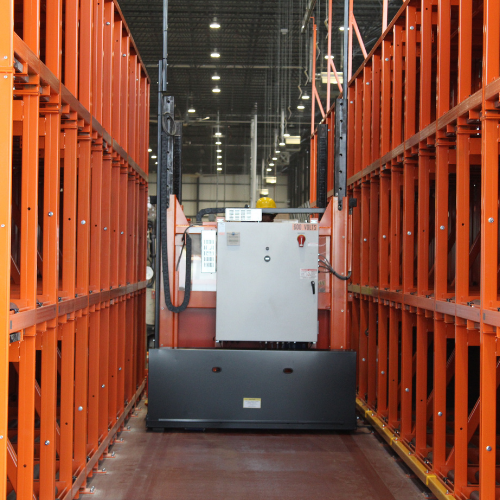
Design with future capacity in mind. One option is to make better use of vertical space. Multi-level battery storage can potentially increase capacity without requiring a larger building footprint.
For dealers and third-party equipment buyers, this is an important part of the conversation. Don’t just quote storage for the customer’s current battery count. Ask where they expect the fleet to be in three, five, or ten years. A little planning today can save a lot of disruption later.
6. Forgetting About Hydrogen During Charging.
The Mistake: Treating ventilation as something to figure out after the chargers and batteries have been installed.
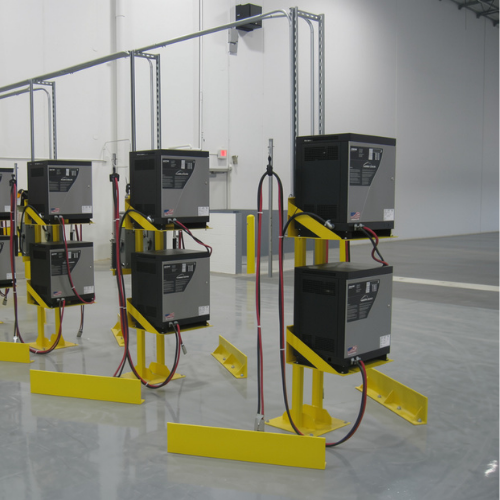
Lead-acid batteries can produce hydrogen during charging. If hydrogen isn’t adequately controlled and removed, it can accumulate and create a serious safety hazard. This is one of those issues that shouldn’t be left until the end of a battery-room project.
The question to ask
Has the battery charging area been evaluated to ensure there is adequate ventilation or hydrogen extraction for the charging operation?
The better approach
Make ventilation and hydrogen control part of the battery-room design from the beginning. The appropriate system should be evaluated by qualified professionals against the requirements applicable to the facility and charging operation. For dealers and third-party providers, the takeaway is simple: don’t treat the charger as the end of the battery-room conversation. The room itself is part of the system.
7. Ignoring the Time, It takes to Change a Battery.
The Mistake: Looking at battery changing as a necessary task rather than a productivity opportunity.
A few extra minutes probably doesn’t sound like much. Until you do the math. If a fleet changes batteries multiple times a day, across multiple trucks and shifts, those minutes add up quickly. And the time isn’t necessarily spent changing the battery. Operators may be waiting for equipment, positioning the truck, lining up the battery, walking around the equipment, or manually handling components. That’s paid time. And the forklift isn’t earning anything while it’s sitting there.
The question to ask
How much operator and truck time is being spent on each battery change?
Then break it down.
How much is actual battery movement?
How much is positioning?
How much is waiting?
How much is unnecessary movement?
The better approach
Watch the process. Time it. Map the steps from the truck arriving at the battery area to the truck leaving with a charged battery. You may find that the biggest opportunity isn’t a faster operator. It’s better equipment or a better layout. For dealers, this can be one of the most valuable parts of a fleet review. Instead of simply selling a piece of equipment, identify where the customer’s time is going and determine whether the handling system can eliminate some of it.
8. Designing Around The Equipment Instead of The Fleet.
The Mistake: Buying a battery handling solution first and figuring out fleet compatibility afterward.
It happens. A customer has a particular battery changer in mind, so that’s what gets quoted. Then someone realizes the customer has three different forklift models. Different battery sizes. Different compartment configurations. Different operating heights. Now the “one solution” doesn’t necessarily work for the whole fleet.
The question to ask
Have you evaluated every truck and battery configuration that the handling equipment needs to accommodate?
The better approach
Start with the fleet and workflow. Then select the equipment.
That may mean a dedicated solution for a specific application. Or it may reveal an opportunity for one flexible unit to handle multiple truck types. For dealers, flexibility can be a big part of the value proposition. If one battery handling system can do the work that would otherwise require several dedicated pieces of equipment, the customer may save capital, floor space, and maintenance costs.
The key is to evaluate that opportunity before the equipment is specified—not afterward.
9. Not Providing Enough Space Between Batteries.
The Mistake: Trying to get as many batteries as possible into the available space.
It makes sense on paper. More batteries per square foot must be better, right? Not if operators can’t easily get to them. Overcrowding can make inspection, charging, maintenance, and battery changes more difficult. It can also mean moving one battery to reach another. That’s when storage starts working against the operation.
The question to ask
Can every battery be accessed without having to move other batteries first?
If the answer is no, ask how much time that costs over a week.
The better approach
Design storage around the workflow, not just capacity. Consider access, equipment clearances, charging locations, traffic flow, operator movement, and future battery requirements. This is another area where vertical storage can make a difference. The objective isn’t simply to fit more batteries into the room. It’s to store them in a way that makes the entire battery operation work better.
10. Focusing on Purchase Price Instead of Total Cost.
The Mistake: Choosing battery handling equipment because it has the lowest initial price.
It’s an easy comparison to make. One piece of equipment costs $X. Other costs more. Buy the cheaper one. But purchase price is only one part of the equation. What does it cost to maintain? How long does it take to operate? How much floor space does it require? Can it handle multiple truck types? What happens when the fleet changes? How well does it stand up to the battery-room environment? And what does downtime cost when it isn’t available?
The question to ask
What will this solution cost over five or ten years—not just on the day we purchase it?
The better approach
Look at total cost of ownership. Consider productivity, expected life of the equipment, maintenance, equipment utilization, flexibility, safety, floor space, service requirements, and future expansion alongside the initial purchase price. For dealers and third-party buyers, this is where a good equipment evaluation becomes more valuable than a simple price comparison. The lowest purchase price isn’t necessarily the lowest operating cost.
The Battery Room Is Part of The Fleet!
Battery handling is easy to overlook because it happens behind the scenes. The forklift is out on the floor. The battery room is somewhere in the back. The equipment isn’t moving product. But every battery change affects whether that forklift gets back to work. Every unnecessary minute adds up. Every poorly designed storage position takes up space. Every piece of equipment that isn’t suited to the environment creates another potential maintenance expense. And every workaround that operators have accepted as “normal” may be costing the facility more than anyone has calculated.
That’s why battery handling deserves to be evaluated as a system, not as a collection of individual products.
For dealers and third-party equipment buyers, that means asking better questions before recommending equipment. For fleet managers, it means looking beyond the battery itself and examining what happens before, during, and after every battery change. And for anyone planning a new battery room, it means thinking beyond today’s fleet. The goal isn’t to buy the cheapest battery handling equipment. It’s to build a battery handling operation that is safe, efficient, flexible, and built for the way the fleet works.
Because the best battery handling solution isn’t necessarily the one with the lowest price tag. It’s the one that keeps people moving, keeps trucks working, makes the best use of your space, and continues to make sense as your operation changes.